
Why Is Allantoin a Must-Have for Sensitive Skin Care?
What Is Allantoin?
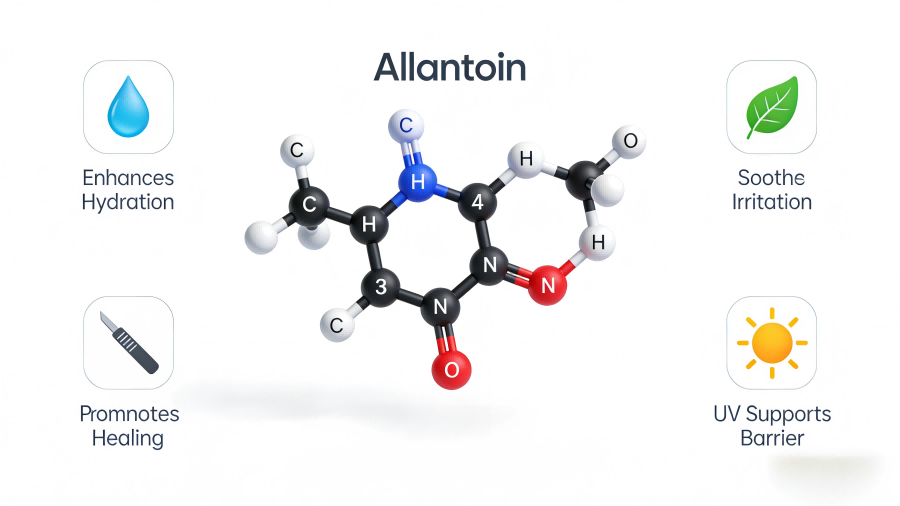
| Allantoin, chemically known as 5-ureidohydantoin (molecular formula: C4H6N4O3), is a colorless, odorless crystalline powder with a long history of use in skincare and pharmaceuticals. It occurs naturally in plants such as comfrey, maple trees, and wheat germ, and can also be produced through artificial synthesis—a method that ensures purity and consistency for cosmetic formulations. What setsAllantoinapart from other skincare ingredients is its exceptional compatibility with human skin and its multifunctional properties that address multiple Sensitive Skin concerns simultaneously. From a chemical and physical perspective, Allantoin boasts favorable characteristics for cosmetic applications: it is slightly soluble in water (0.5% at 20°C) and alcohol, more soluble in alkaline solutions, stable within a pH range of 3-9, and highly heat-resistant. Most importantly, it has been proven safe through decades of use, with extremely low allergenic potential, making it suitable for even the most delicate skin types. | 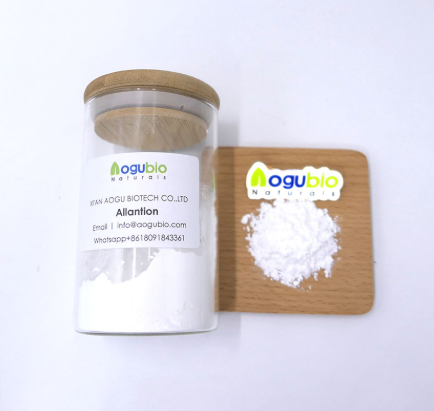 |
The Core Benefits of Allantoin for Sensitive Skin: Backed by Research
- Intense Moisturization and Barrier Repair
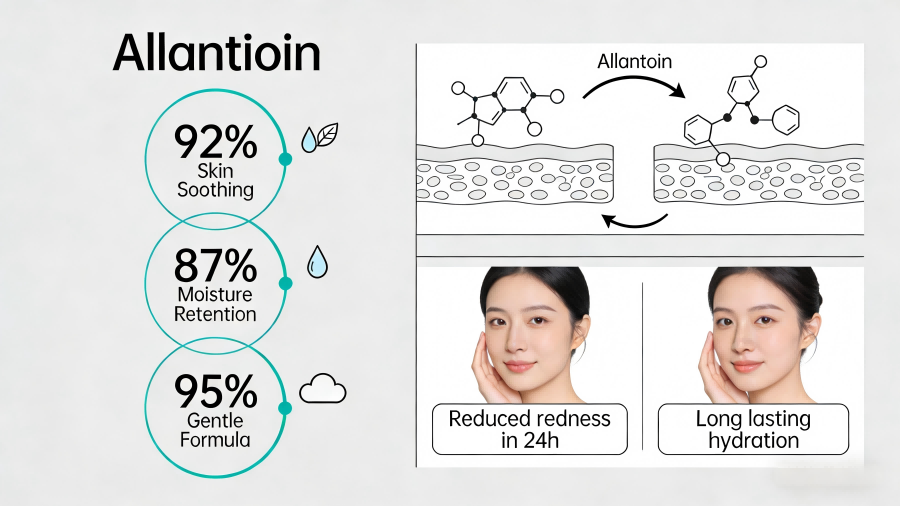
Allantoin acts as a powerful humectant and emollient, thanks to its multiple hydrophilic groups that form hydrate complexes with water molecules. It penetrates the stratum corneum to enhance water retention, significantly reducing TEWL and restoring the skin' s natural moisture balance.
- Gentle Anti-Inflammatory and Soothing Effects
Inflammation is a hallmark of sensitive skin, triggered by factors ranging from UV exposure to harsh skincare products. Allantoin exerts its anti-inflammatory effects by inhibiting the release of pro-inflammatory cytokines such as IL-1α, IL-6, and TNF-α, as well as suppressing the activity of cyclooxygenase-2 (COX-2)—a key enzyme in the inflammatory response.
A study by Araújo et al. (2010) published in Acta Cirurgica Brasileira further demonstrated Allantoin' s ability to modulate the inflammatory response by preventing the chemotaxis of inflammatory cells to damaged skin areas. This action reduces oxidative stress and tissue damage, while promoting the formation of well-organized collagen fibers—essential for skin repair. For sensitive skin, this translates to relief from redness, stinging, and burning sensations, making Allantoin a staple in soothing products for post-sun exposure or post-procedure care.
- Mild Keratolytic Action Without Irritation
Unlike harsh exfoliants such as alpha-hydroxy acids (AHAs) or salicylic acid, which can irritate sensitive skin, Allantoin offers a gentle keratolytic effect. It softens the bonds between keratinocytes (dead skin cells), facilitating their natural shedding without damaging the underlying healthy skin cells. This process improves skin texture, reduces roughness, and prevents pore clogging—beneficial for sensitive skin types that are prone to both dryness and occasional breakouts.
This mild exfoliating property is particularly advantageous because it avoids the irritation associated with stronger exfoliants, while still promoting skin renewal. For sensitive skin users who struggle with dull, flaky skin, Allantoin provides a safe way to achieve a smoother, more radiant complexion.
- Accelerated Wound Healing and Tissue Regeneration
Sensitive skin is often more prone to micro-tears and minor irritations, which can lead to discomfort and prolonged redness. Allantoin' s wound-healing properties were first discovered in its natural source, comfrey, and have since been validated by numerous studies. It stimulates the proliferation of epidermal cells and fibroblasts, accelerates the synthesis of type I and III collagen, and reduces the risk of excessive scar formation.
Key Product Advantages of Allantoin in Cosmetic Formulations
- High Safety Profile: Allantoin has been extensively tested and is recognized as a safe ingredient by global regulatory bodies. It has a very low risk of causing allergic reactions, even in concentrations up to 2%—the maximum commonly used in cosmetics.
- Excellent Compatibility: It blends seamlessly with most cosmetic ingredients, including other moisturizers (glycerin, hyaluronic acid), antioxidants (vitamin C, vitamin E), and soothing agents (panthenol). It does not reduce the efficacy of other active ingredients and often enhances their performance through its mild promote penetration properties.
- Versatile Concentration Range: Effective at concentrations as low as 0.1%, making it suitable for a wide range of products from gentle cleansers to intensive repair creams. Most cosmetic formulations use 0.1-2% Allantoin, with higher concentrations reserved for targeted repair products.
- Stability: Its stability across a wide pH range and resistance to heat make it easy to incorporate into various manufacturing processes, ensuring consistent efficacy in the final product.
- Synergistic Effects: Acts as a penetration enhancer for other water-soluble active ingredients (e.g., niacinamide, panthenol), improving their absorption and overall effectiveness without causing irritation—unlike harsh penetration enhancers such as alcohol.
Applications of Allantoin in the Cosmetics Industry
- Moisturizing Products
It is a key ingredient in moisturizers, lotions, and serums, where it enhances hydration, reduces TEWL, and softens dry, rough skin. It is also used in lip balms and body lotions to address chapped lips and body dryness—common concerns for sensitive skin users.
- Sensitive Skin-Specific Products
Many brands formulate sensitive skin lines with Allantoin as a core ingredient, including soothing serums, anti-redness creams, and gentle toners. It is also a common component in baby care products, such as diaper creams and moisturizers, due to its mildness and ability to soothe diaper rash and irritation.
- Repair and Post-Care Products
Allantoin is a mainstay in barrier repair creams, post-sun repair products, and post-procedure skincare. It helps calm irritated skin after UV exposure, chemical peels, or laser treatments, accelerating healing and reducing redness.
- Cleansing Products
Gentle cleansers and makeup removal products often contain Allantoin to reduce the tightness and dryness that can occur after cleansing. It helps maintain the skin's natural barrier during the cleansing process, preventing irritation from surfactants.
- Hair and Scalp Care Products
Beyond facial skincare, Allantoin is used in shampoos, conditioners, and scalp treatments. It soothes sensitive scalps, reduces dandruff and dryness, and improves hair elasticity by maintaining scalp hydration.
Conclusion: Why Allantoin Is Non-Negotiable for Sensitive Skin
For anyone with sensitive skin, building a skincare routine that is both effective and gentle is a delicate balance. Allantoin' s unique combination of moisturizing, soothing, exfoliating, and healing properties makes it a must-have ingredient, addressing the core concerns of sensitive skin without causing further irritation. Backed by decades of research and validated by peer-reviewed studies, it offers a science-backed solution for those seeking to strengthen their skin barrier, reduce redness, and achieve a healthy, radiant complexion.
- Name: Yuki
- E-mail: sales02@nahanutri.com
- WhatsApp:+8618066950297